

Interview with Nobel prizewinner Bernard Feringa
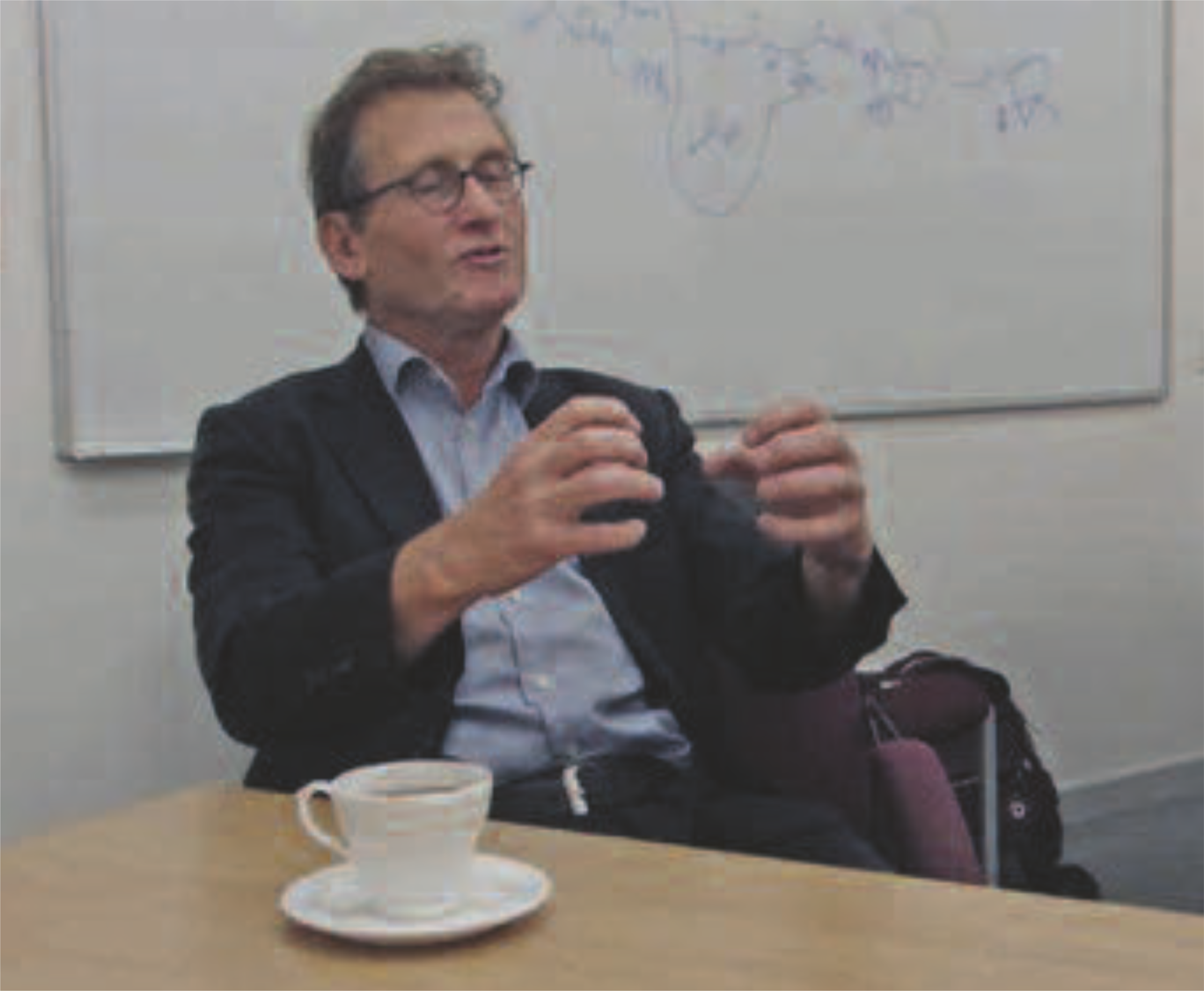
Bernard (Ben) Feringa is a professor of chemistry at the University of Groningen in the Netherlands. In 2016 he, Jean-Pierre Sauvage and Fraser Stoddart were awarded the Nobel prize in chemistry ‘for the design and synthesis of molecular machines’. Ben Feringa recently visited the University of York, and Sam Daly took the opportunity to interview him for CHEMISTRY REVIEW.
SD: What did it feel like to be awarded the 2016 Nobel prize in chemistry?
BF: It came as a big surprise and I was greatly honoured. When I got this call from Stockholm I was in my office talking to my students. Suddenly the telephone rang and it was the secretary of the Nobel committee, and I was so much in shock that he said “Dr Feringa, are you still there? It’s just so quiet” and I said “Yeah, but I don’t know what to say!”
SD: So you didn’t expect it whatsoever?
BF: No, I didn’t expect it. Of course people have mentioned that this field may be rewarded with a Nobel prize, and many people asked me if I was thinking about Nobel prizes, but I was just busy teaching and doing my research. If you are a sportsperson and you want to win gold in the Olympics, you train hard, work hard and are dedicated. If you constantly think about the gold medal you will never win it.
In 2011 I got a telephone call from a colleague who said: “Ben, did you realise you were on American television last night? Yes, you were on The Simpsons!” I was on there, and so was W.E. Moerner who won the prize in 2014, so this was predicted by The Simpsons. I said if being in The Simpsons was the highest I could reach in my life, this is fantastic.
SD: Your Nobel prize was awarded to you for your work in molecular motors. Would you be able to briefly describe what a molecular motor is?
BF: Let me start with your body—it is full of motors and machines. Think about the movement of your muscles, there are millions and millions of tiny motors that ‘walk’ and make this movement possible. There are motors that transport things into and out of cells on filaments. ATPase is a rotary motor that spins and generates fuel. In the macro world around you, there are motors everywhere, like in our cars. But though chemists are extremely good at making static objects, they were never any good at making anything moving. So we thought: can we make these types of molecular motors that move?
We were initially working on molecular switches. For example, in your eye, retinal switches with light energy from bent (cis retinal) to linear (trans retinal). We suddenly realised that one of our molecular switches wasn’t just switching but rotating forward in 90-degree turns. If we repeated the 90-degree turns, we had a full 360-degrees turn, and in fact a rotary motor. We realised the reason why it works is because using light we can go from 0 degrees to 90 degrees by putting in energy. The second form isn’t so stable and is driven forward to 180 degrees to be stable again. So, we have a cycle of four steps making the rotation possible. This is the principle for the rotary motor. We use the energy of the light, the ‘fuel’ just like the fuel for your car, to make the C=C bond rotate.
Finally, there needs to be rotation in only one direction for it to be a rotary motor. Think of your car, if there is equal probability of going backwards and forwards you wouldn’t want to travel in it. So, we had to design a molecule with one single handedness (chirality) so that it moves only clockwise, or only anti-clockwise. You have directionality and motion.
SD: What potential do you see for molecular motors in the next few decades?
BF: It is very early days, we are taking our first primitive steps. What we currently do is we rotate things on responsive soft surfaces, like the liquid crystal display on your smartphone. We are currently working on molecular muscles, which can work and bend. Applications will come, but this will take quite a bit of time. What you could think of is an object that may need to self-repair. Once you know how to use motion, you can begin to think of other designs and apply your knowledge. My prediction is that in about 50 years from now we will have tiny robots that are self-propelling, which you can inject into your veins and detect tumour cells or deliver a drug. At the moment it is science fiction, but why shouldn’t it become science reality?
SD: You have been known to say: “Universities should be a playground”. What do you mean by this?
BF: The university should primarily educate, and by doing so push the frontiers and ask, ‘what do we not know?’ For that you need all the creativity from the young stars, the students at university. So, universities should keep enough space for young people to ‘play’, to use their creativity and think ‘what is beyond this horizon of our knowledge?’ We should stimulate students at university, as you’re all very bright. Don’t wait till you’re 65 to start creative thinking.
SD: What message would you like to give to our readers who are considering going to university?
BF: Follow your dreams. Each student has their own talent. Follow what gives you a lot of energy and good feeling, don’t always take it for granted that it should be easy. I think it’s really important that you challenge yourself a bit. There is so much to learn and discover. It’s a real joy when you uncover something. But most importantly, with your talents, follow your dreams.
Further reading
Read more about Ben Feringa’s molecular motors in the accompanying article Molecular Cars.
Read Ben Feringa’s Nobel lecture “The Art of Building Small: from Molecular Switches to Motors” online at nobelprize.org and be first to learn about future prizewinners.